The TeacherWorld Symbol
The Flower on the Shield
Every symbol carries a story. The daisy at the heart of the TeacherWorld shield carries centuries of story — and one generation's unfinished revolution.
The Flower
The Daisy: Ancient Symbol of Innocence, Renewal & Truth
The daisy is one of the oldest and most universally beloved flowers on earth. Its name comes from the Old English "day's eye" — because every morning its petals open toward the sun, and every night they close in rest. It is a flower that follows the light. It cannot help itself.
In Celtic legend, whenever an infant died, God scattered daisies across the earth to comfort grieving parents — making the daisy a symbol of consolation after loss and the promise that new life follows grief. In Norse mythology, the daisy was the sacred flower of Freya, goddess of love, beauty, and fertility — representing childbirth, motherhood, and new beginnings.
The daisy is a composite flower — two flowers fused into one. Because two flowers become one, the daisy has long symbolized true love — the union of what appears separate into something whole. Shakespeare placed a daisy chain in Hamlet to represent Ophelia's innocence. Wordsworth wrote an entire poem in its honor.
The daisy grows in fields, in cracks in pavement, in places where nothing else survives. It looks delicate. It is not.
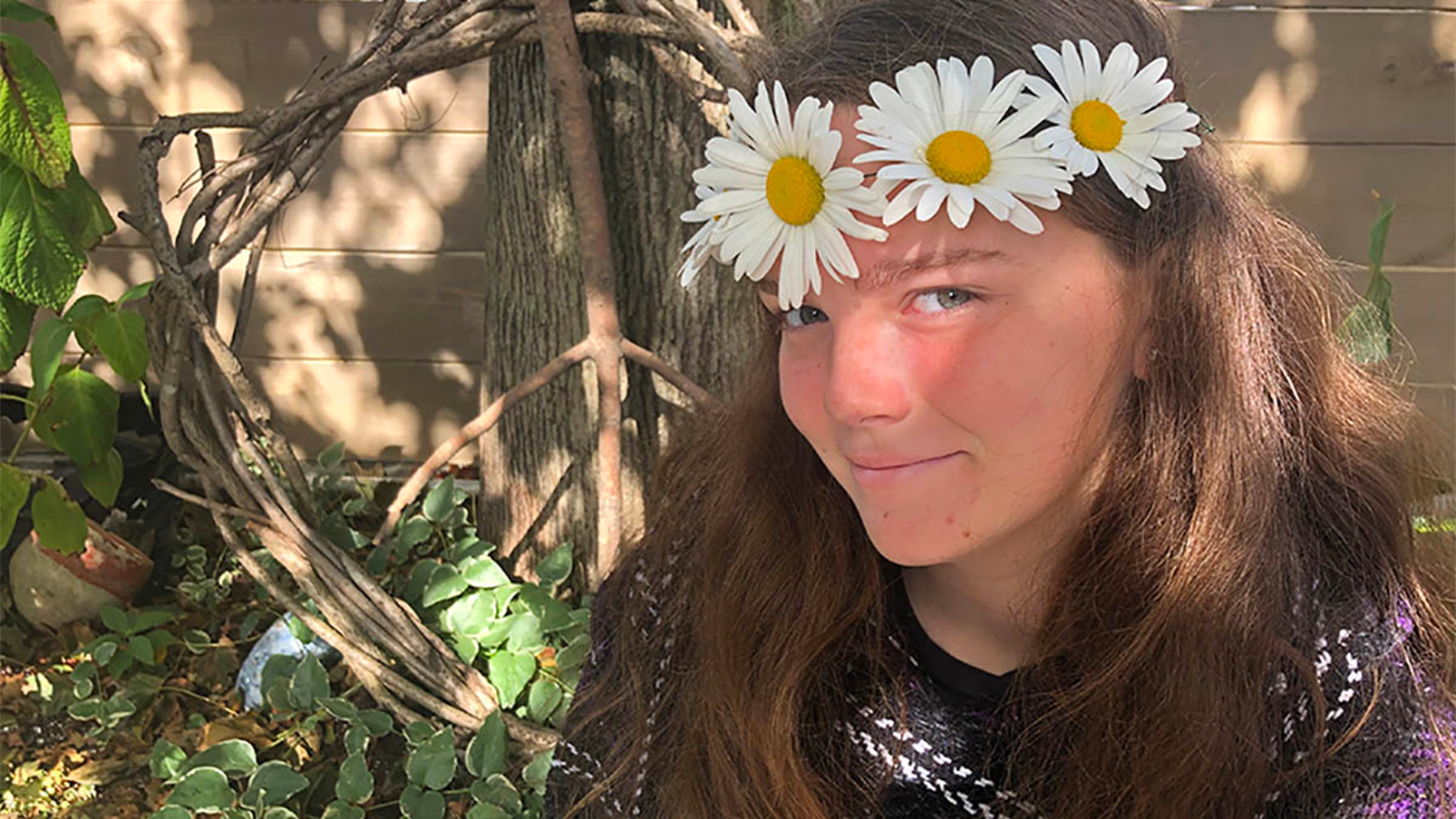
A Flower Child — wearing the day's eye
The Legacy
The Flower Children:
They Tried to Change the World
In 1965, Beat poet Allen Ginsberg wrote an essay called How to Make a March/Spectacle. He urged anti-Vietnam War protesters to carry flowers — not weapons, not signs of rage — but flowers. His idea was radical in its simplicity: meet violence with beauty. Meet hatred with life.
The phrase "Flower Power" was born in Berkeley, California. By 1967 — the Summer of Love — it had swept the world. As many as 100,000 young people flooded San Francisco's Haight-Ashbury district, wearing flowers in their hair, distributing flowers to strangers, placing flowers in the barrels of soldiers' rifles.
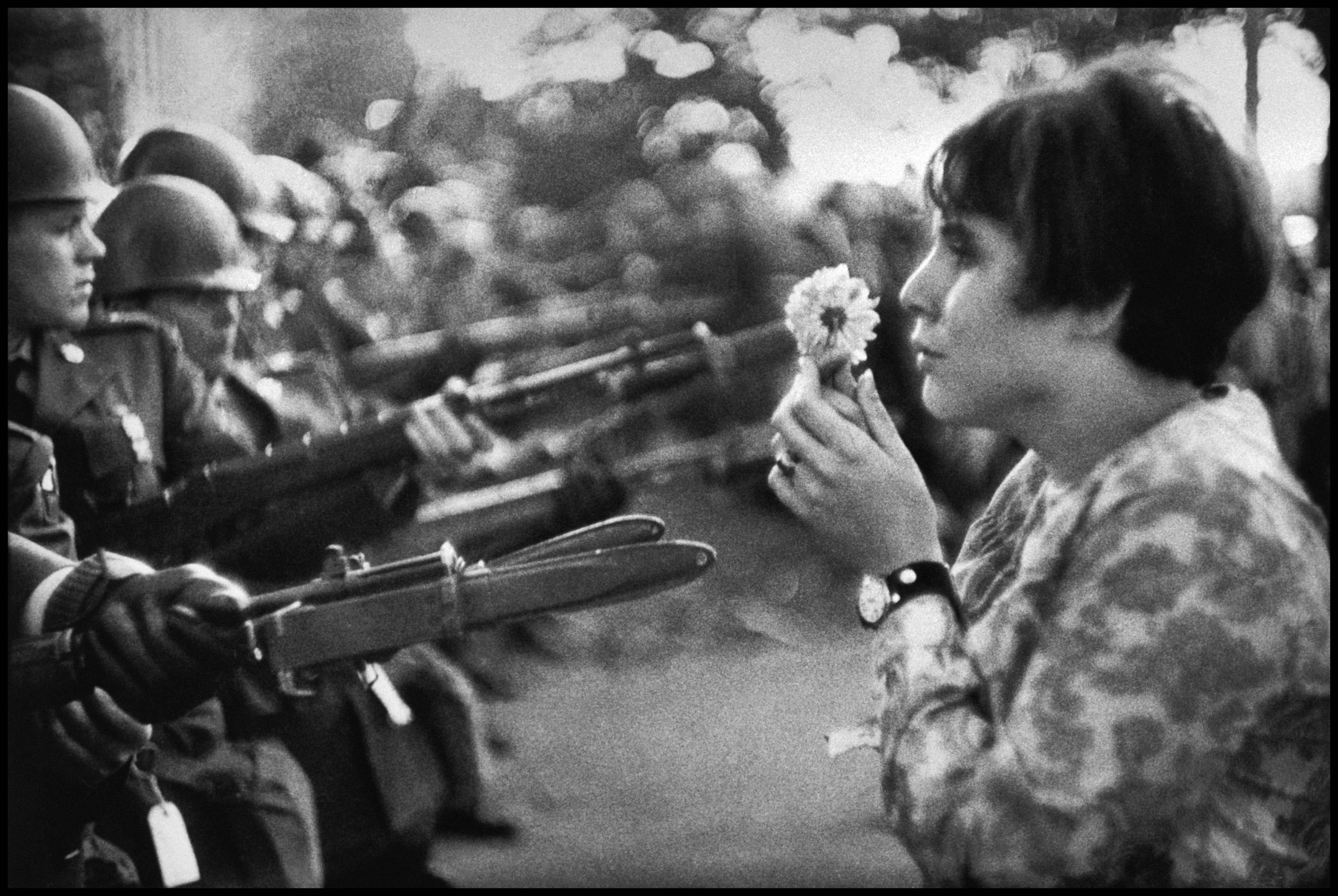
The defining image of an era — love meeting force
"The Flower and the Bayonet"
In October 1967, photographer Marc Riboud captured Jan Rose Kasmir — a 17-year-old — holding a chrysanthemum in front of a line of armed soldiers at the Pentagon. Bernie Boston's Pulitzer Prize–nominated photograph Flower Power showed a protester placing carnations into the barrels of National Guard rifles.
These images became the defining icons of an entire generation's belief: that love is stronger than force.
The Flower Children were not naive. They were young people who had watched their government send their brothers to die in a war built on lies. They chose flowers as their weapon because they understood something profound: you cannot build a better world with the tools that built the broken one.
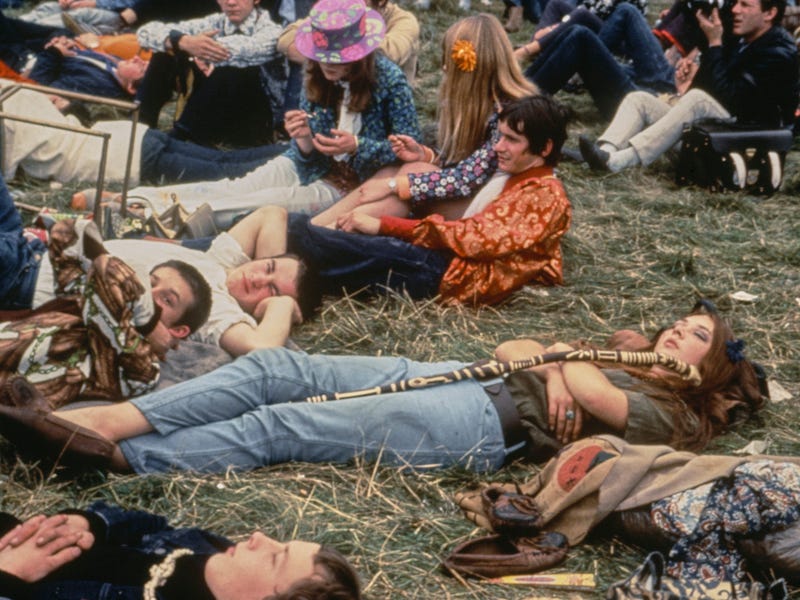
Woodstock, 1969
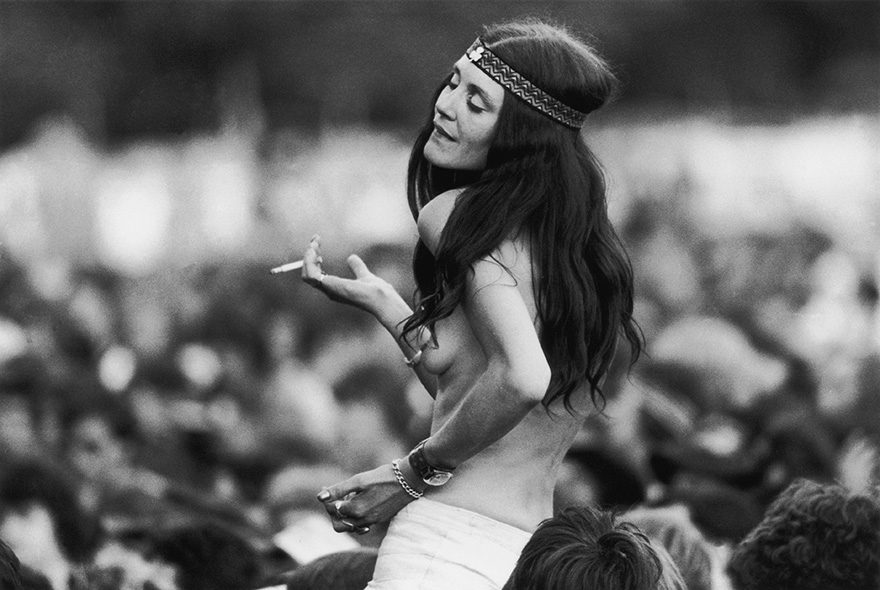
The Style of Freedom

Love in Action
Icons of the Movement
The Peace Machines: Rolling Declarations of Love

The Flower Power Bug
Every surface a canvas for love and protest
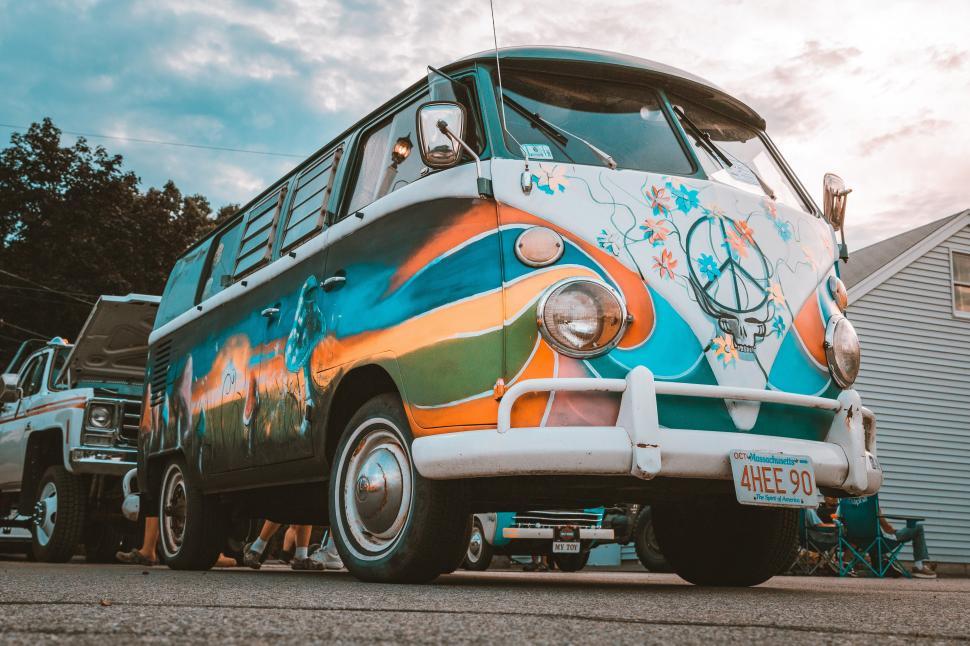
The Peace Bus
Moving community — carrying the revolution

The 1960s Peace Van
Home, freedom, and the open road
The VW Beetle and Bus became the unofficial vehicles of the Flower Power movement — painted with peace signs, flowers, and declarations of love. They were rolling manifestos, visible proof that a different world was possible.
The Unfinished Revolution
They Grew Up.
Many Became Teachers.
What happened to the Flower Children? They grew up. They had children. And many — drawn by the same impulse that put flowers in their hair — became teachers, nurses, social workers, and doctors.
They walked into classrooms carrying the seeds of the revolution: the belief that every child deserved to be seen, that learning should be joyful, that education should draw out the best in a person rather than stamp a shape into them. They launched the Open Classroom Movement and fought for children with disabilities to receive a free and appropriate education (P.L. 94-142, 1975).
"The rainbow magic of flower power has yet to spring forth. The seeds of spiritual and social transformation which were planted then lie dormant still."
— A Flower Child, decades later
The revolution they started was not finished. It was suppressed. But the seeds did not die. They went underground. And now they are ready to bloom again.
The Globe
The World at the Center of the Flower
The globe sits at the center of the daisy — not above it, not behind it, but inside it. This placement is intentional and precise. It says: the world is held by the flower, not the other way around.
The Flower Children believed that love and peace could change the world. They were right about the principle. TeacherWorld holds the same belief — that teachers, armed with restored wholeness, with truth, with joy — can and will change the world.
Global Reach
Teacher depletion is not a local problem. The globe at the center declares that TeacherWorld's mission is planetary in scope — from the USA to India, Brazil to South Africa.
Love Holds the World
The world is not above the flower — it is held within it. Love, care, and teaching are the foundation, not the decoration.
The Shield
Why a Shield? Because Teachers Need Protection.
The Flower Children placed flowers in rifle barrels. The teachers who followed them discovered they needed something more: a shield of identity. A declaration of who they are and what they stand for.
Teachers deserve robust, unconditional support — from their communities, their institutions, and each other.
Whole-being health — physical, mental, emotional, spiritual — is not a luxury for teachers. It is the foundation of everything.
Teachers must know who they are — their calling, their power, their lineage — before the system can strip it from them.
Teachers are not employees to be managed. They are professionals to be empowered — economically, politically, and vocationally.
Every teacher carries a legacy — from the Flower Children who became educators, to the students who will carry their wisdom forward.
Dignity is not earned. It is inherent. TeacherWorld exists to restore what was taken and protect what remains.
The Full Meaning
When You See the Shield, Remember This
The daisy on the TeacherWorld shield is not decoration. It is a declaration.
It carries the memory of every Flower Child who believed the world could be changed through love — and who walked into a classroom to prove it.
It carries the innocence of every child who ever looked up at a teacher and saw possibility. The resilience of every teacher who stayed when the system tried to break them. The new beginnings that are possible when truth is spoken and healing is allowed to happen.
It carries the globe — because this is not a local fight. It is a planetary one. Wherever teachers are depleted, the daisy must bloom.
And it sits inside a shield — because the Flower Children were right that love is the most powerful force on earth, but they also learned that love without protection is vulnerable. TeacherWorld is the shield that the Flower Children who became teachers never had.
The revolution they started is not over. It just found its home.